Stars at Voyageurs National Park(Photo: Stephanie Vermillion)
Few venues let you admire the heavens like national parks—particularly during star parties. These events are exactly what they sound like: gatherings of dozens to thousands of night-sky enthusiasts, all focused on watching the cosmos.
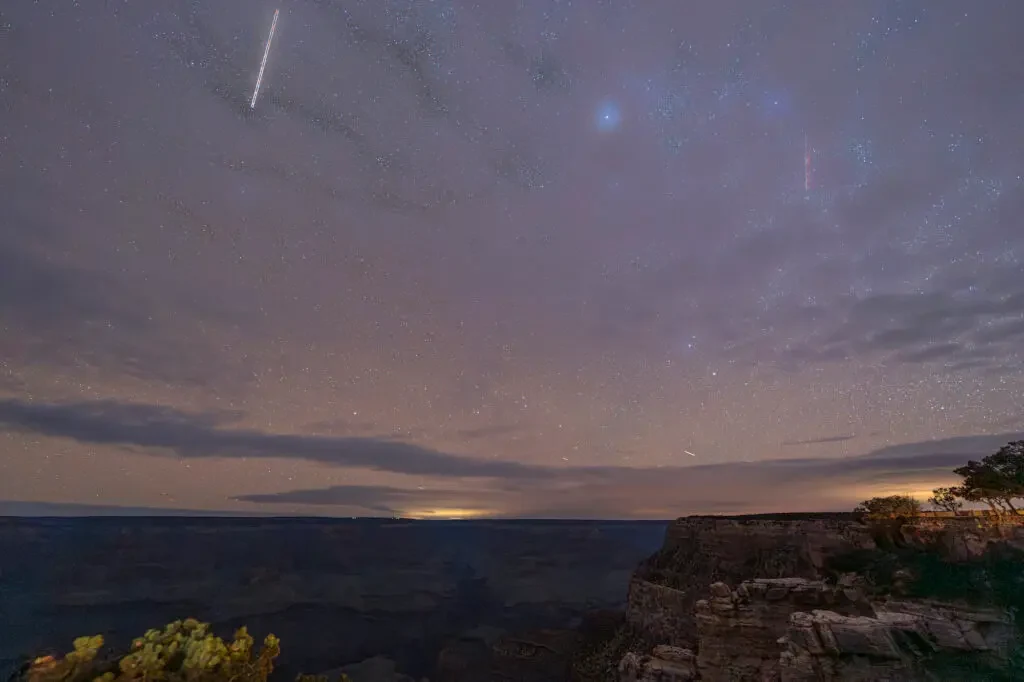
National park star parties aren’t a new phenomenon, but they’ve become particularly buzzed-about with therecent boom in astrotourism. Take Grand Canyon National Park. In 1991, the park partnered with theTucson Amateur Astronomy Associationto host their first Grand Canyon Star Party. Now, the week-long summer celebration draws more than 1,000 nightly visitors for guided sky-watching, cultural storytelling, and astrophotography workshops. And it’s not the only park alluring travelers with astronomical awe.
National parks now host star parties across the country, with the bulk of events scheduled over the summer and early fall. That’s when the Milky Way is at its most dazzling; plus, warmer weather makes all-night fun more feasible.
Here are nine of the best national park star parties and astronomy festivals to bookmark for 2025, and a bonus nightscape celebration for early 2026.
Grand Canyon Star Party
There’s nothing like catching the cosmos above theGrand Canyon’sstriated walls. Go all in on scenic stargazing with rangers, astronomers, and other guest experts at theGrand Canyon Star Partythis June. The event draws thousands of attendees with powerful telescopes, space presentations, Indigenous sky talks, and music designed to bring these vivid nightscapes to life. The festivities are spread across the North and South Rim visitor centers, and typically last until around 11 p.m. Attendance is free and open to the public, with park entrance starting at $35 per private vehicle.
Bryce Canyon Astronomy Festival
See the hoodoos beneath the pinpricked heavens at the annualBryce Canyon Astronomy Festival. This weekend-long event, which is free with park admission (starting at $35 per private vehicle), entertains visitors with astrophotography workshops, astronomical history sessions, expert-guided stargazing, and astronomy 101 talks. The final evening will bring a particularly spectacular show with Mars, the bright star Regulus, the crescent moon, and Mercury aligning in the western sky just after sunset. TheBryce Canyon National Parkvisitor center is the fest’s central gathering point, equipped with a telescope that’s available to the public from 10 p.m. to midnight both nights.
Badlands AstroFest
Stargazing among South Dakota’s striped buttes feels like sky-watching from outer space—and a stop at the annual JulyBadlands AstroFestonly elevates the wonder. This three-day event, which takes place at the Ben Reifel Visitor Center, offers planetarium activations, solar telescopes (watch for sunspots—where Earth’s dazzlingaurora showsoriginate), and guided stargazing beneathBadlands National Park’s vast skies. Numerous speakers help illuminate both the myths and science of the celestial world. Better yet: It’s a free event; you’ll just have to paypark entrance (from $30 per private vehicle).
Logan Pass Star Parties at Glacier National Park
The Big Sky Astronomy Club hoststwo nights of out-of-this-world stargazingduring the new moon at Glacier National Park each year. This summer’s events will lure astronomy enthusiasts toscenic Logan Pass, the highest point you can drive to in the park. The activities—from watching distant galaxies and neighboring planets via telescopes (don’t miss Mars just above the western horizon) to dark-sky stargazing—begin at 10 p.m., but participants must arrive at the Logan Pass parking lot by 9:30 p.m. Tickets (from $5) are required and available the day before each star party in theSt. Mary and Apgar visitor centers; park entrance starts at $35 per private vehicle.
Dakota Nights Astronomy Festival
Watch the stars swim above a sea of multi-hued rock and prairie grasses atTheodore Roosevelt National Parkwith theannual Dakota Nights Astronomy Festival. This year’s event, scheduled for late August, will include expert astronomy speakers, guided sky-watching via telescopes and laser pointers (keep watch for Saturn on the eastern horizon after sunset), and night-sky storytelling, as well as hands-on activities like astro-inspired arts and crafts. It’s free to partake, although park entrance (starting at $30 per private vehicle) is required.
Voyageurs National Park Star Party
Close out the summer with waterfront sky-watching at theVoyageurs National Park Star Party, which runs the Friday and Saturday of Labor Day weekend. The event, hosted by Voyageurs Conservancy and several other local partners, helps visitors appreciate this DarkSky Park’s pristine nightscapes. Not only is Voyageurs famous for its countless stars, but it’s also among the country’sbest national parks for chasing the aurora. This star party welcomes park-goers with telescopes, laser-pointer constellation viewing, and storytelling about this wetlands ecosystem. Details remain to-be-determined for this year’s event, but most experiences are free. (Entrance to Voyageurs National Park is also free, althoughfees are requiredfor camping, houseboats, and select tours.)
Can’t make it to the summer show? Bookmark another Voyageurs sky-appreciation event—Boreal Stargazing Week—for winter astro adventuring come February.
Sequoia and Kings Canyon Dark Sky Festival
This September, scenic viewpoints and visitor centers across Sequoia and Kings Canyon National Parks will welcome stargazers with telescopes, eye-popping sky viewing, and star-themed activities. The festival is free (with park admission, starting at $35 per private vehicle) and is often lauded for its fun, beginner-friendly approach to astronomy. Visitors enjoy space-movie screenings, astro-inspired arts and crafts sessions, and immersive stargazing led by local experts. Session specifics forthis autumn’s eventare still being finalized, but get ready for planet watching. This year’s dates are especially ideal for spotting Saturn; the ringed planet will rise in the southeast sky after sunset with Uranus, visible only by telescope, following behind it
Great Basin Astronomy Festival
See Saturn, the Pleiades star cluster, the Andromeda galaxy, and countless other interstellar bodies above Nevada’s aspen forests and sagebrush-scented foothillsGreat Basin Astronomy Festival. The annual event is free, although reservations are required for several events, including telescope sessions. The astronomy get-together includes guest speakers from NASA, tours of the Great Basin Observatory, guided stargazing, and an “art in the dark” night experience. It’s best to arrive early, because the event is first-come, first-served and reaches capacity once the Lehman Caves and Great Basin Visitor Center parking lots fill.
Joshua Tree Night Sky Festival
Each year, the Sky’s the Limit Nature Center and Observatory, located right outside Joshua Tree National Park’s North Station entrance, hosts atwo-day stargazing extravaganza. The festival offers dark-sky stargazing and telescopes to spy on nearby Betelgeuse and Saturn’s rings, all with the stark desertscapes and dramatic silhouettes ofJoshua Tree National Parkas the backdrop. Tickets for this event, as well as fleshed-out event details, will be available this summer. Prices have not been announced, but tickets typically go on sale during early summer.
Death Valley Dark Sky Festival
TheDeath Valley Dark Sky Festivalis another major NPS stargazing gathering—and for good reason. Far from city lights,Death Valley’s night skies are some of the darkest in the U.S. And, since nighttime offers a respite from the park’s famous heat this is one of the best ways to experience the valley for the first time. The annual event, which typically takes place in late February or early March, features astronomy talks, astrophotography meetups, family-friendly sky-watching tours, and telescope viewing to spy on deep space. Dates for the 2026 event will be released in the fall of 2025; tickets are free, but park entrance is required (starting at $30 per private vehicle).